TL;DR
A 13.25x17.75x1 air filter usually needs replacing every 60 to 90 days, dropping to 30 to 45 with pets, allergies, or an air conditioner running most of the year. One inch filters hold less dust than thicker media, so a monthly look at the pleats keeps energy bills lower than replacing on a date.
Quick Answer
Change a 13.25x17.75x1 air filter every 60 to 90 days in a low dust home, using standard efficiency pleated media as the baseline. Move to 30 to 45 days with a shedding dog or cat, four to six weeks with asthma or allergies. In coastal South Florida the shorter end applies.
Key Takeaways
A 13.25x17.75x1 filter's nominal one inch depth measures about 0.75 inches.
ENERGY STAR advises checking any filter monthly, changing quarterly.
Pets, allergies, and heavy runtime each shorten the interval, and stack.
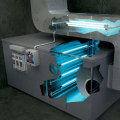
A loaded filter restricts airflow and lets dust reach the coil and UV lamp.
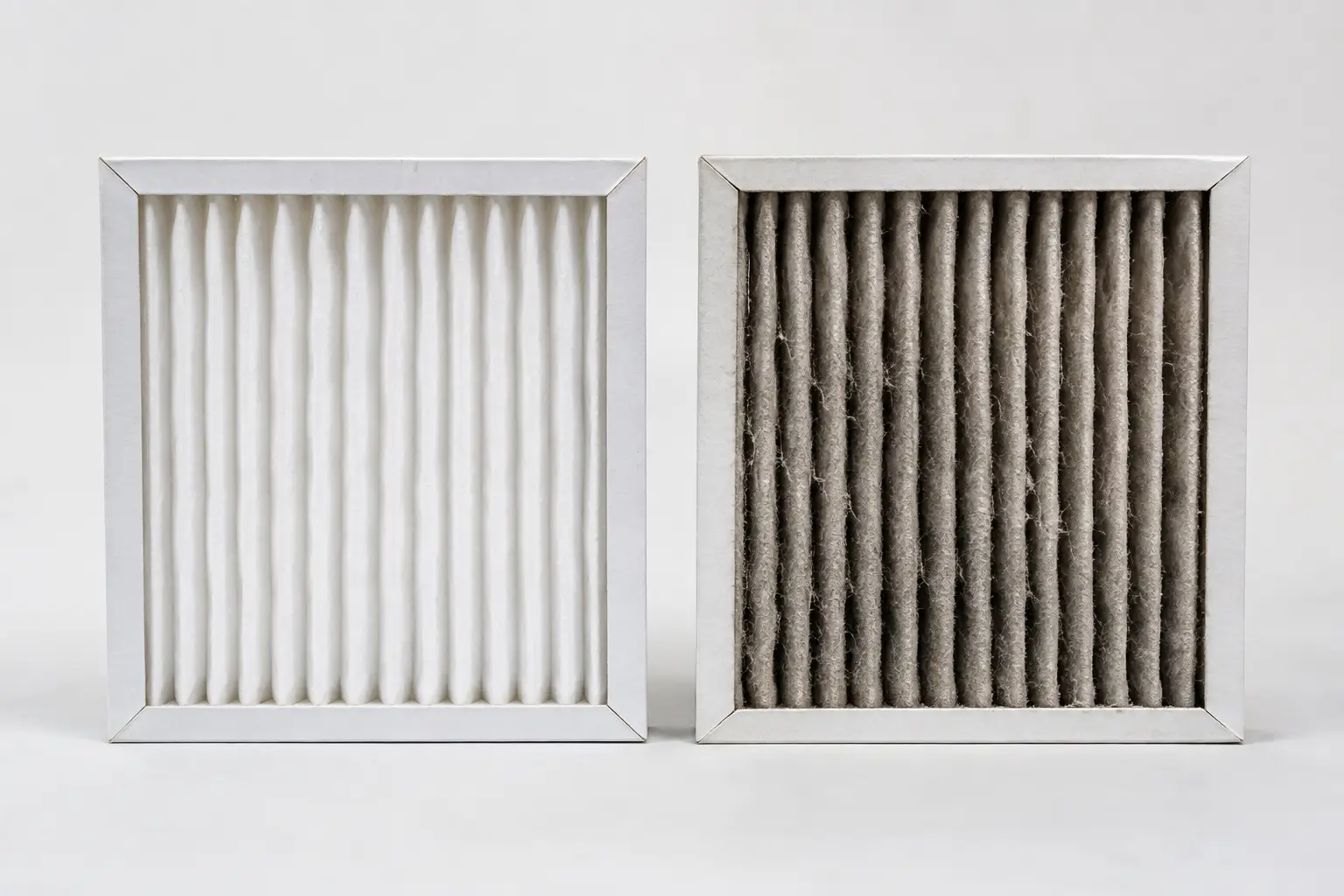
Matted gray pleats mean it is finished, whatever the date says.
How Often Should You Change a 13.25x17.75x1 Air Filter?
Most homes change a 13.25x17.75x1 air filter every 60 to 90 days. With pets, allergies, or an always running air handler, shift to 30 to 45 days. Depth is why: a one inch filter holds a fraction of the media area of a four inch cabinet, so it fills sooner. Buying affordable replacement filters in quantity makes the shorter cycle painless.
Subtract from the baseline for each condition.
Baseline, no pets or allergies: 90 days.
One shedding pet: 30 days.
Two or more shedders: 45 days.
Allergies or asthma in the home: 30 days.
Year round cooling or nearby construction: 15 to 30 days.
Do not go below three weeks. A filter spent that fast points to a duct leak pulling attic or garage air past it, covered in the hidden benefits of air duct sealing.
Why the 90 Day Filter Change Rule Falls Short in Humid Climates
The 90 day rule is a packaging number built for a national average that assumes a system idle for months. Delray Beach systems get no rest. Run the arithmetic the label hides: a filter is sold in days but loads by air volume. A system cooling eleven months moves nearly double the air of one cooling five, so a 90 day filter does 180 days of work here. Hence a seasonal system tune up pairs with a shorter filter interval.
Humidity compounds it. The EPA recommends holding indoor relative humidity between 30 and 50 percent, since mites and mold need moisture. A saturated, restricted filter pushes moisture and debris onto the coil, which sets up a failure few homeowners connect. Ultraviolet energy does not penetrate dust. A film on the coil face becomes a shade, and the growth underneath continues while the lamp burns above it. The filter is what keeps the lamp aimed at a surface it can reach.
When To Change a Furnace Filter with Pets
Change a furnace filter with pets every 30 to 45 days, closer to 30 with multiple animals or a heavy shedder. Dander is not hair. It is a protein carrying skin flake small enough to stay airborne, and AAFA reports six in ten people in the United States are exposed to cat or dog dander.
Here is what most filter advice gets wrong for pet homes. Dander does not build the gray surface mat dust does. It packs the pleat valleys with hair, so the face looks serviceable while the path through is choked. Judging by the face is the mistake. Hold it to a light and look through. If the pleats block it, the filter is done, and fresher indoor air returns with it. Where hair has reached the ductwork, a thorough duct cleaning clears what the filter cannot.
Air Filter Lifespan with Allergies and Asthma
Air filter lifespan with allergies runs four to six weeks, not 60 to 90 days. The shorter cycle is about consistency of capture. As the filter loads, pressure drop rises and it moves less air. The same cadence helps when smoke and outdoor pollution push particle counts up.
MERV 11 and 13 capture more of the fine particles tied to allergy and asthma symptoms. The trade off is airflow, so check the MERV 13 CFM range your system can handle before upgrading. High efficiency media on a short cycle works. Left in six months, it does not.
Dirty Air Filter Signs Worth Acting On
The clearest dirty air filter signs are visual, but several surface as comfort or cost problems first. Any one justifies pulling the filter that day, and is reason to consider stronger particle capture at the next change.
Gray or brown pleats, or a layer holding a fingerprint.
Dust back on furniture right after cleaning.
A cooling bill climbing while habits stay flat.
A musty smell when the system kicks on.
Ice on the refrigerant line is separate. Severe restriction can drop coil temperature enough to freeze condensate, where a filter change is the first step, not the fix. On older equipment, a properly matched system installation solves more than any filter.
Why the Exact 13.25x17.75x1 Size Matters
Odd sizes have no safe substitute, and the reason is counterintuitive. A quarter inch gap sounds trivial beside 235 square inches of filter face. It is not: media resists airflow, open air does not. A gap worth one percent of the opening carries far more airflow, unfiltered, to the coil. A filter is only as good as its worst seal. If it rattles, a snug frame fit is the fix.
Match the printed dimensions. A 13.25x17.75x1 air filter is built for this housing, and its nominal one inch depth measures about 0.75 inches, a convention rather than a defect. Filterbuy, an American maker of residential HVAC filters in odd and custom sizes, lists this one at an actual 13.25x17.75x0.75. Measure the old frame first.
What To Do When This Size Is Out of Stock
A 13.25x17.75x1 filter is not a shelf item at most hardware stores, so a backorder is normal rather than a sign the size is discontinued. Odd sizes restock less predictably, and that gap is where the expensive decision gets made. Three substitutions are safe. One shortcut will cost you a blower motor.
Order a cycle ahead. Two spares removes the pressure behind a bad swap.
Have one built to the actual dimension. Makers that cut to order, Filterbuy among them, ship a finished frame on all four sides.
Run a correct-size lower MERV over a wrong-size higher one. Fit beats efficiency: bypass air is unfiltered at any rating.
Never trim a larger filter. The cut edge sheds fiber into the airstream, and the trimmed side has no frame, so it bows under suction and opens the gap you meant to close.
How Long Does a Pleated Filter Last Compared To Fiberglass
A pleated filter lasts roughly 60 to 90 days; a flat fiberglass panel about 30. Folding multiplies surface area inside the same frame, so it holds more dust and catches finer particles. Filterbuy builds this size in MERV 8, 11, and 13, so efficiency is separate from fit. Look for dust defense pleated media over a flat panel, and multi pack convenience keeps spares on hand.
Fiberglass protects equipment, not indoor air, and the same cleaner air standards apply in colder climates.
When To Shorten the Interval Across a Florida Year
A single replacement interval for the whole year is the wrong model in a climate with no off season. Load on a 13.25x17.75x1 filter is not flat across twelve months in South Florida. It moves with pollen, humidity, and runtime, and those do not peak together. Four stretches behave differently enough to adjust for.
Late winter into spring: pollen peaks while windows are open. Pull in two weeks.
June through September: runtime and humidity peak together, the only stretch loading the filter two ways at once. Shortest interval.
After a storm: a house opened up, a generator running, or drywall repair underway means an early check.
December and January: the one window where a full 90 days is realistic. Reset here.
Building a 1 Inch Filter Replacement Schedule that Sticks
A 1 inch filter replacement schedule works best when you never have to remember it, and bulk pack savings or value four packs keep the shelf stocked.
Write the install date on the frame before it goes in.
Set a monthly reminder to look, not replace. Looking is the habit.
Keep spares so no check ends with a loaded filter in place.
Anchor the check to something monthly, like the power bill.
Turn the system off, slide the filter in arrow toward the blower, and seat the frame flat. Systems built for deeper media cabinets follow the same rule.
Glossary
MERV: the ASHRAE 52.2 scale from 1 to 16 rating particle capture. Residential filters usually fall between 8 and 13.
Filter bypass: air traveling around the frame instead of through the media, usually from an undersized replacement.
Supporting Statistics
ENERGY STAR advises checking a filter monthly and changing it at minimum quarterly. ENERGY STAR, Heat and Cool Efficiently
The EPA reports people spend roughly 90 percent of their time indoors. U.S. EPA, The Inside Story
AAFA reports six in ten Americans are exposed to cat or dog dander. AAFA, Control Indoor Allergens
7 Essential Resources
U.S. Department of Energy on heating and cooling. Energy Saver
American Lung Association on pet dander. American Lung Association
CDC on asthma triggers. CDC, Controlling Asthma
ASHRAE technical FAQs on filtration and MERV. ASHRAE Technical FAQs
Florida Department of Health on mold and humidity. Florida Department of Health
CPSC on biological pollutants. CPSC, Biological Pollutants
NIH review of allergen reduction. NIH, Minimizing Allergen Exposure
Frequently Asked Questions
Can I Vacuum a 13.25x17.75x1 Pleated Filter Instead of Replacing It?
No. Pleated media relies on fiber structure and often an electrostatic charge. Vacuuming crushes the fibers and dislodges the charge while leaving particles behind, so it returns with less capture and more restriction. Landlords standardize on filters for rental properties instead.
Does a Higher MERV Rating Mean I Can Wait Longer Between Changes?
The opposite, and it trips up almost everyone. Efficiency and lifespan pull against each other: a filter capturing more per pass fills faster. People upgrade to MERV 13 then stretch the interval because it feels like a better filter, getting high restriction and a starved system. Higher MERV means a shorter cycle.
Does a UV Lamp Reduce How Often I Need To Change the Filter?
No. A germicidal lamp targets microbial growth on surfaces and in the air it reaches. It captures no dust, dander, or pollen, and cannot restore airflow. A clean filter keeps the lamp on a clean coil, and professional duct cleaning handles buildup downstream.
Final Thoughts
Filter cadence is one of the few things a homeowner controls, and the gap between effort and result is short. Sizing is fixed, media one decision, the rest a monthly look. Where the system never rests, that look beats the box, and sealing leaky ductwork protects the gains.
Next Steps
Pull the filter and read the size off the frame.
Order Filterbuy spares for two cycles and set a monthly reminder.
If it is spent inside three weeks, have a technician check duct sealing.
Set Your Own Replacement Interval
The right answer to how often to change a 13.25x17.75x1 air filter is the interval your home proves over two or three cycles. Start at the baseline, write the date on the frame, and let the pleats set the schedule.
Learn more about HVAC Care from one of our HVAC solutions branches…
Filterbuy HVAC Solutions - Miami FL - Air Conditioning Service
1300 S Miami Ave Apt 4806 Miami FL 33130
(305) 306-5027
https://maps.app.goo.gl/Ci1vrL596LhvXKU79